
Musée Hergé
Meeting the creator of Tin Tin

***
Today my host dad* took me to visit la Musée Hergé: the Hergé Museum.
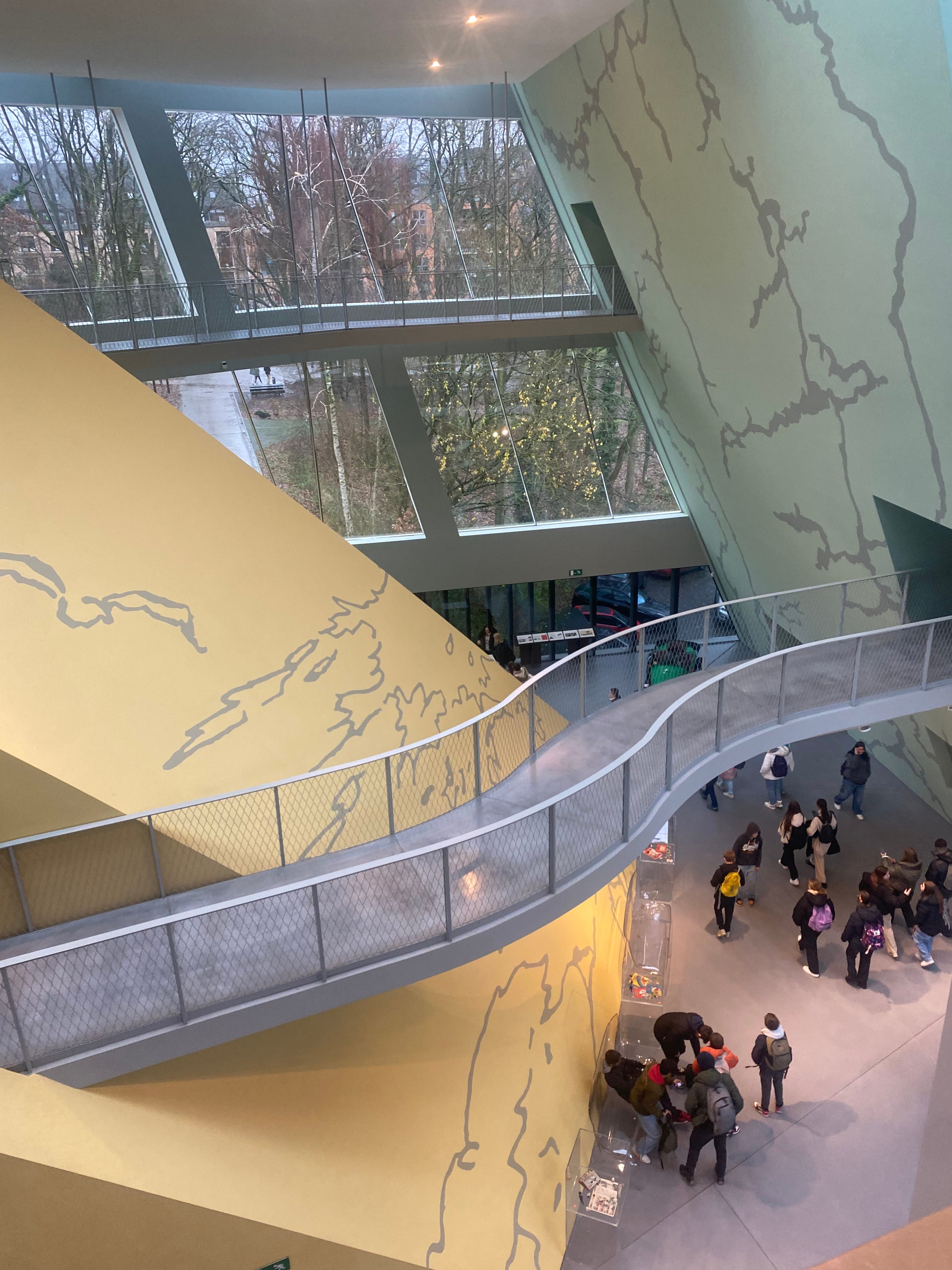
Hergé is the pen name of Georges Remi, the creator of Tin Tin and other comics. When I was little, I loved reading Tin Tin and watching the TV adaptation. I knew that Les Aventures de Tintin had been translated into dozens of languages and that it was beloved worldwide so I was interested to learn more about its creator. From all accounts, Hergé was a kind and genial man, dedicated to his art form and possessing a brilliant mind.
Here are some of my thoughts:
Hergé loved his time in Scouts. From what I learned, he had a lonely childhood with only drawing for company but Scouts gave him an avenue to make friends and take part in many new experiences, broadening his worldview in a way which is reflected in his work. It gave me a kick to see that he loved Scouts so much as I really associate Belgium with a love of Scouts (in French pronounced Scoot). Back in 2003, on the weekends I would go on the train with a friend to Brussels or maybe to explore somewhere new. The train would pull up, the door would open and Scouts would pour in. Even this visit, I had been in Belgium for all of an hour when someone started talking about Scouts. With his love of Scouts, it seems to me that Hergé was through and through a Belge.
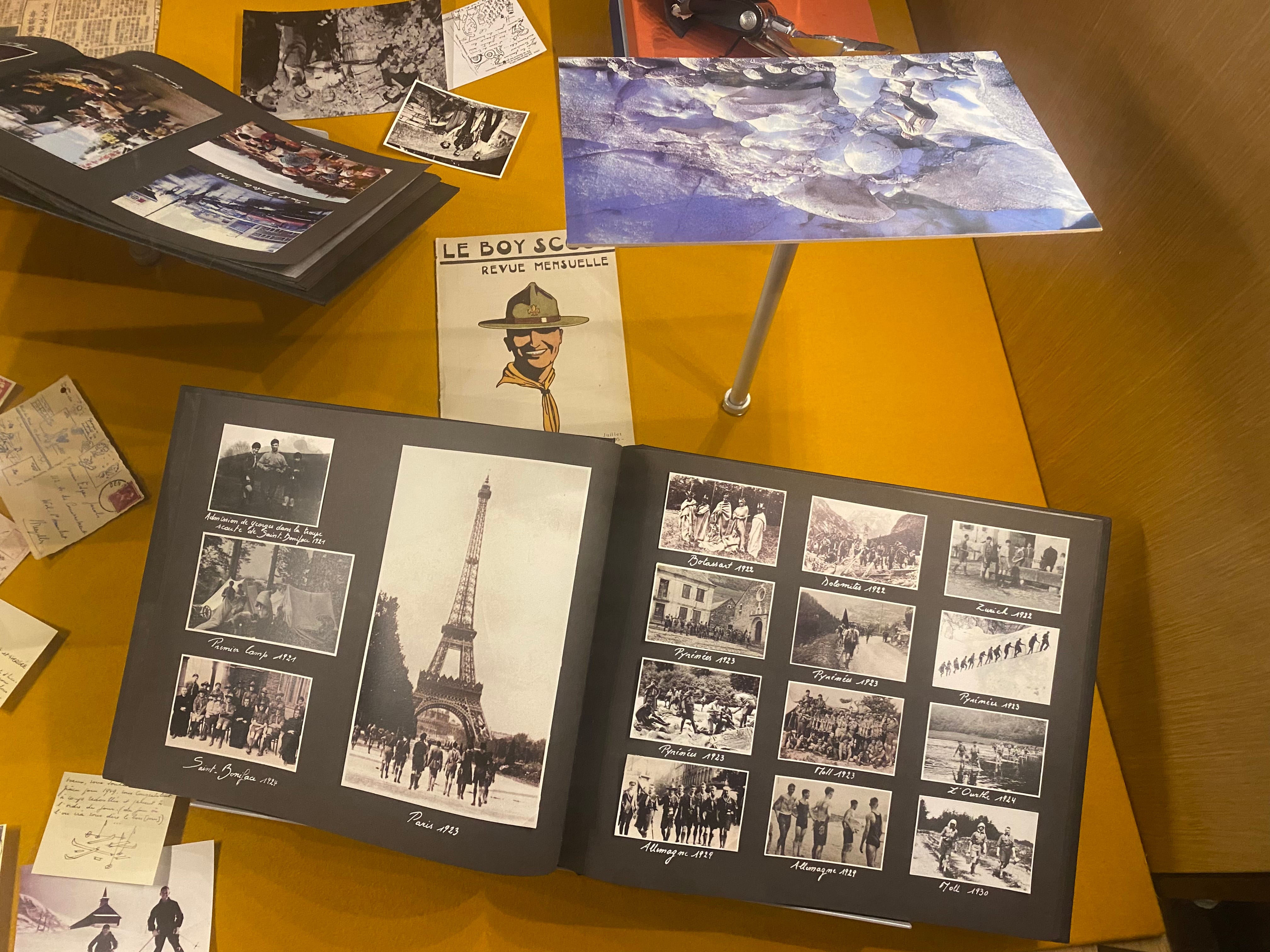
But it was jarring to see in a photo album of his Scout days, amongst photos of hikes in the Pyrenees, a young Hergé and his friends dressed up as American Indians.
Apparently Hergé grew up to have a great love of American Indian peoples and particularly the Plains Indians. I learnt that in one of his comic books, he made it clear that American Indians were exploited by White Americans. He was asked to change this so as to improve book sales in some places (presumably the USA) but he refused.
Nonetheless, I found the depictions of American Indians in the displayed plates of his work somewhat distasteful in how stereotypical they were, even if they are a product of a certain time, place and culture.
What else?
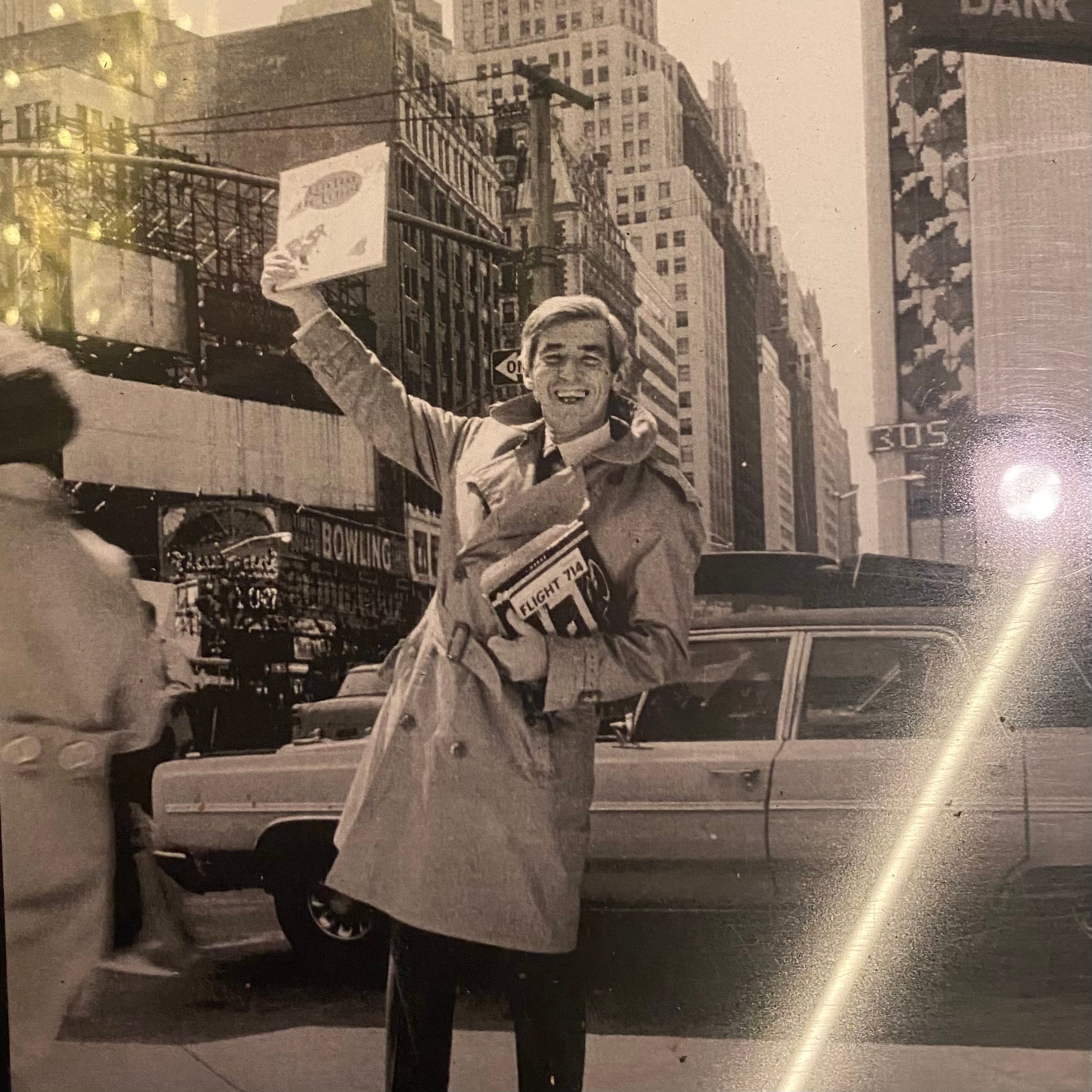
Even though Tin Tin had his dog Snowy (Milou in French) as a companion, Hergé actually loved cats. One exhibit showed photos of him with different cats and some of his drawings of cats. Elsewhere in the museum is a photo of Hergé, blown up so as to fill a whole wall.
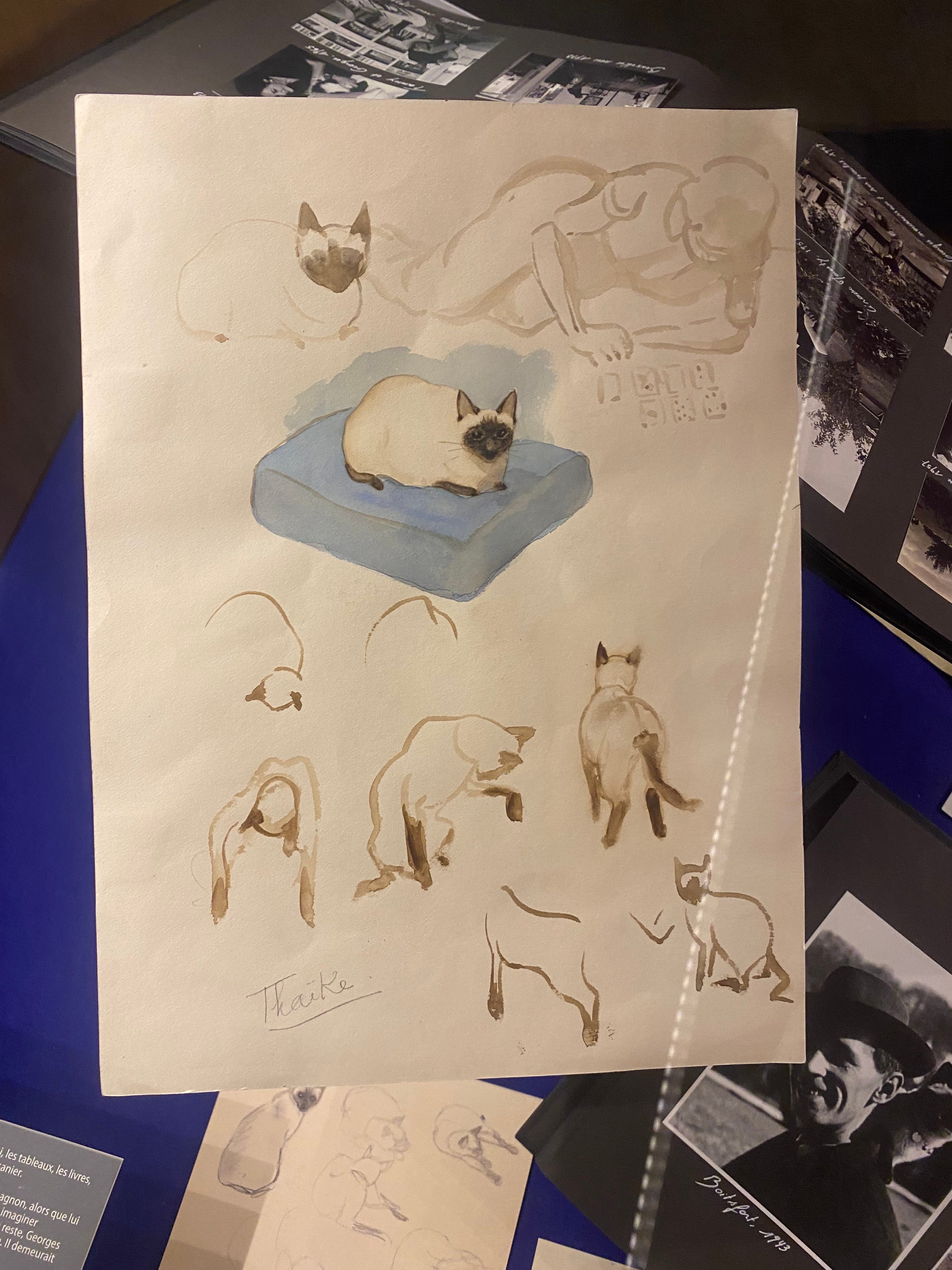
I think Hergé would love that cats are so popular on the internet and that he’d be forever sending cat memes and watching videos of cat antics.
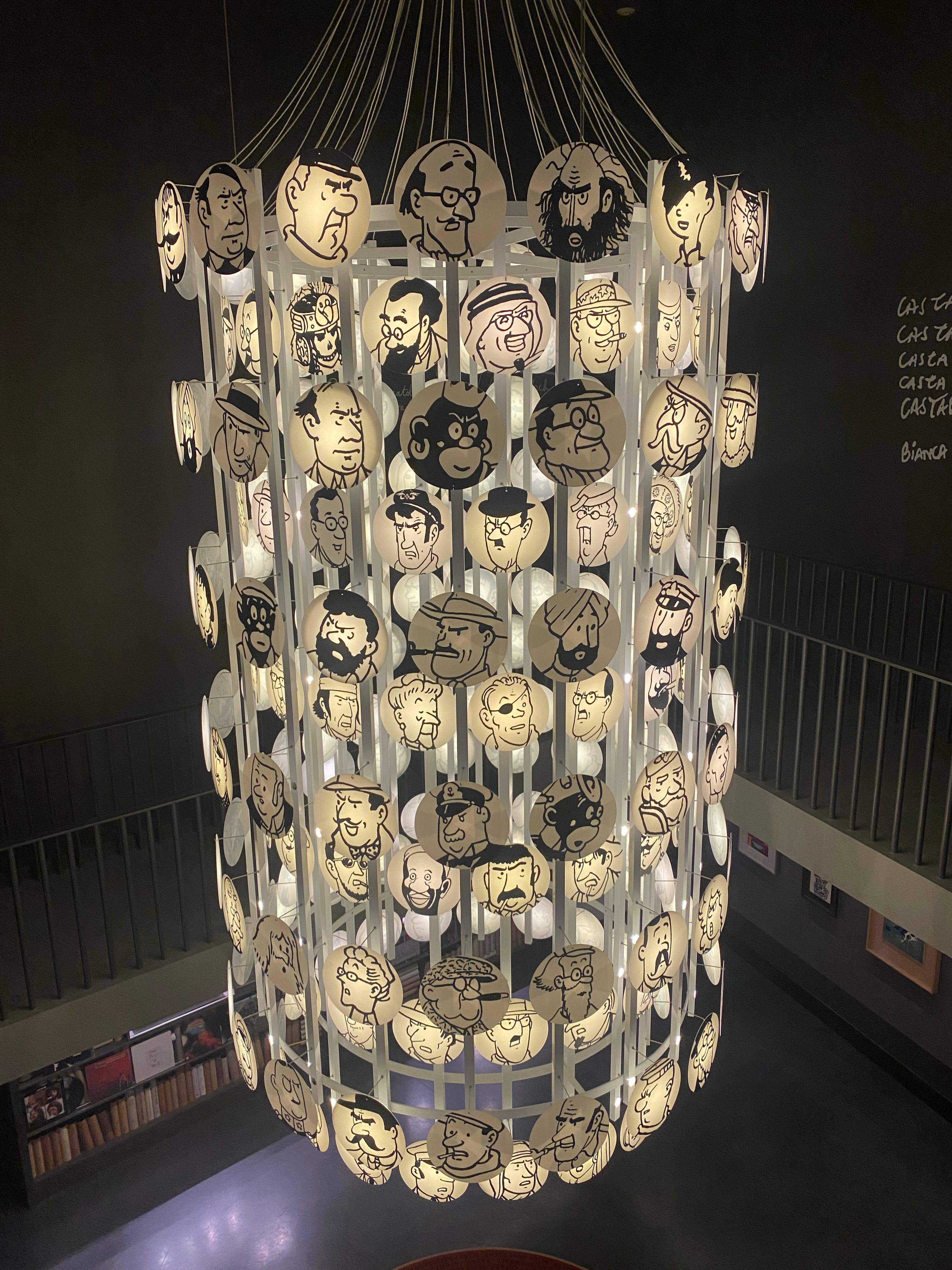
Gergé created over two hundred individual characters for his Tin Tin books. Each of them is featured in this light installation.
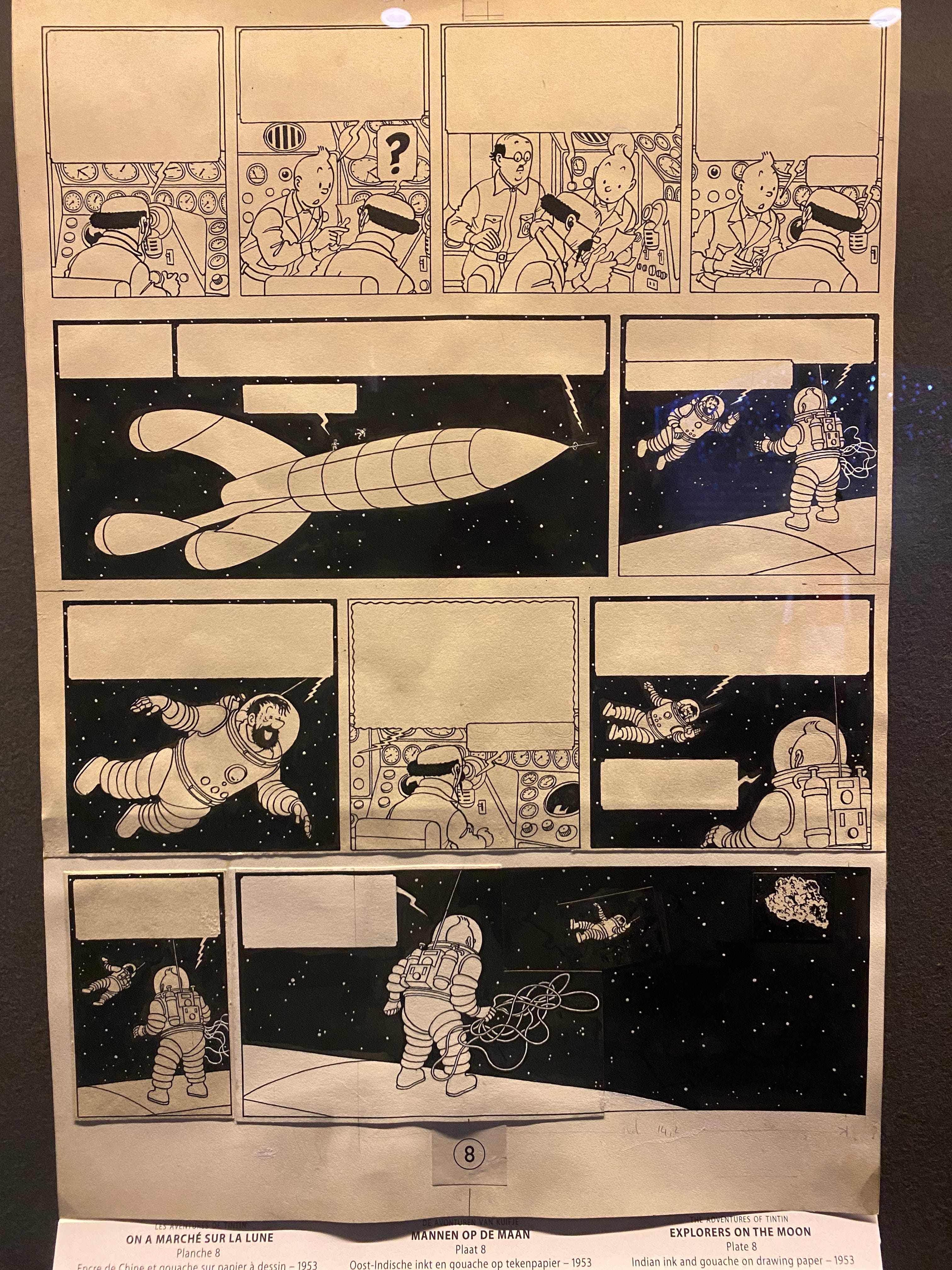
Hergé published two books in which Tin Tin ended up travelling to the moon. These were published a good fifteen years before the actual moon landing! Apparently he and his team worked in these two books for years, using physical models of spacecraft and meticulous research to help them with the details.
I learned that as his career progressed, Hergé conducted meticulous research in the preparation in his book. However in one of his earlier works, set in Great Britain, he incorrectly drew several details such as licence plates and the clothes of police. So many British readers complained that he ended up re-drawing the book. The real turning point was when Hergé set out to create The Blue Lotus. Through the creation of this work, he made friends with a Chinese man, Zhang Chongren, and started to break free of the stereotypes which characterise his early work, including even using The Blue Lotus to poke fun at Belgian misconceptions about China.
I admire that this man was open to growth in a time when most were not.
As I walked through the exhibits, I noticed that apart from the small section on Zhang Chongren and his influence on Hergé, there was limited critique on the part of the museum on colonisation and how Hergé’s work at times contributed to particular discourses about Africa, about Asia and so on.
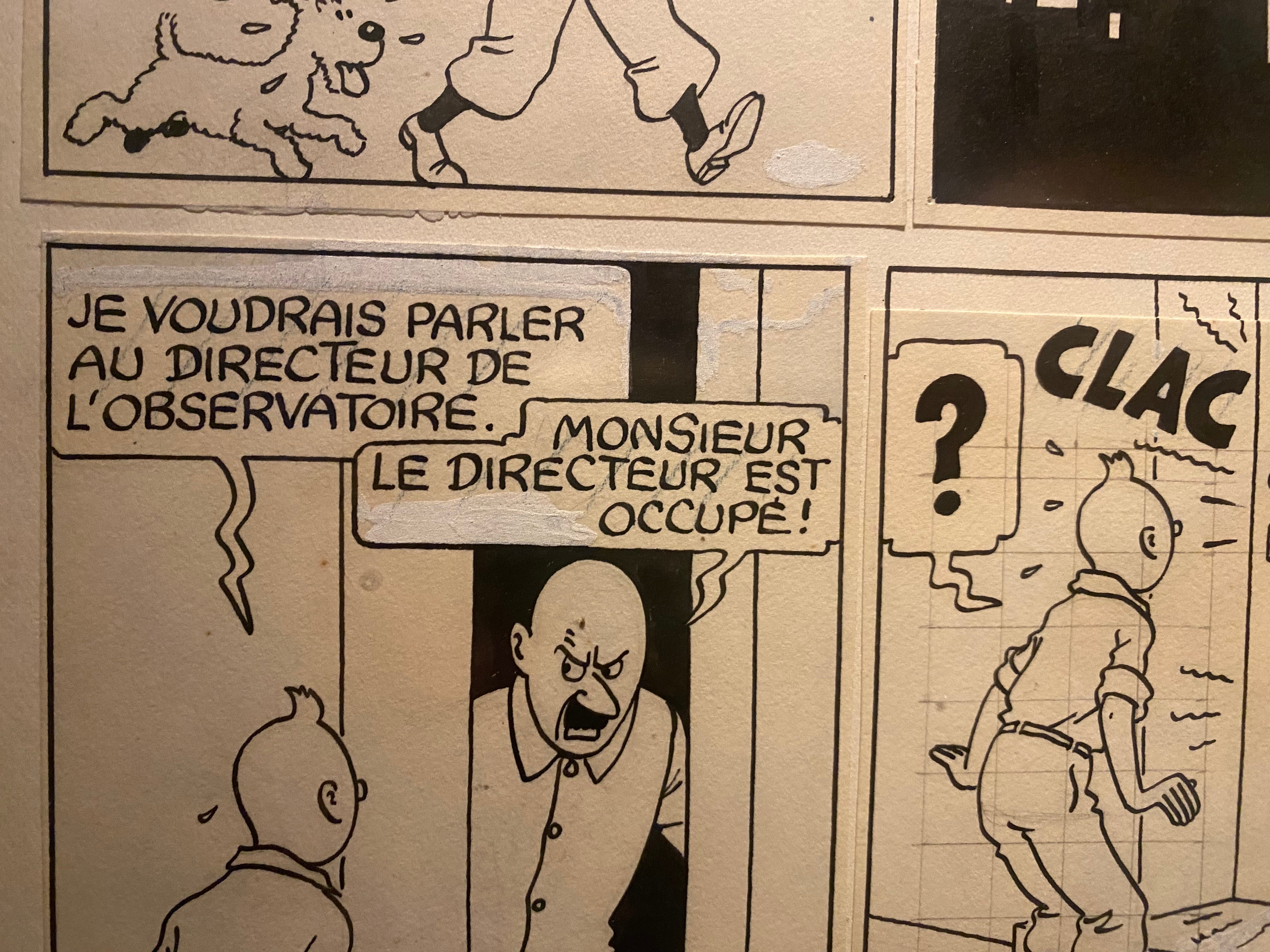
My favourite part was seeing the original drawings with pencil marks, correction fluid, literal cutting and pasting and so on.
There was a good amount of seating available so I could sit and listen to the audio guide and rest my back. One part wasn’t very disabled friendly - a set of stairs where wheelchair users had to call for an attendant rather than lift access. I found all the seating and so on very accessible as a fat person and the restaurant had sturdy chairs without arms and tables that could be pulled away from the bench seating.
My time at the museum helped me realise just how influential Hergé was and how much he advanced the form of comic books (BDs in French, short for bandes dessinées). There was a quote from him from years ago where he hoped that by the year 2000 comic books would be much more acceptable and read by more. I don’t often read comics, graphic novels nor manga, I’m certain that he would be so happy about his widespread they are today.
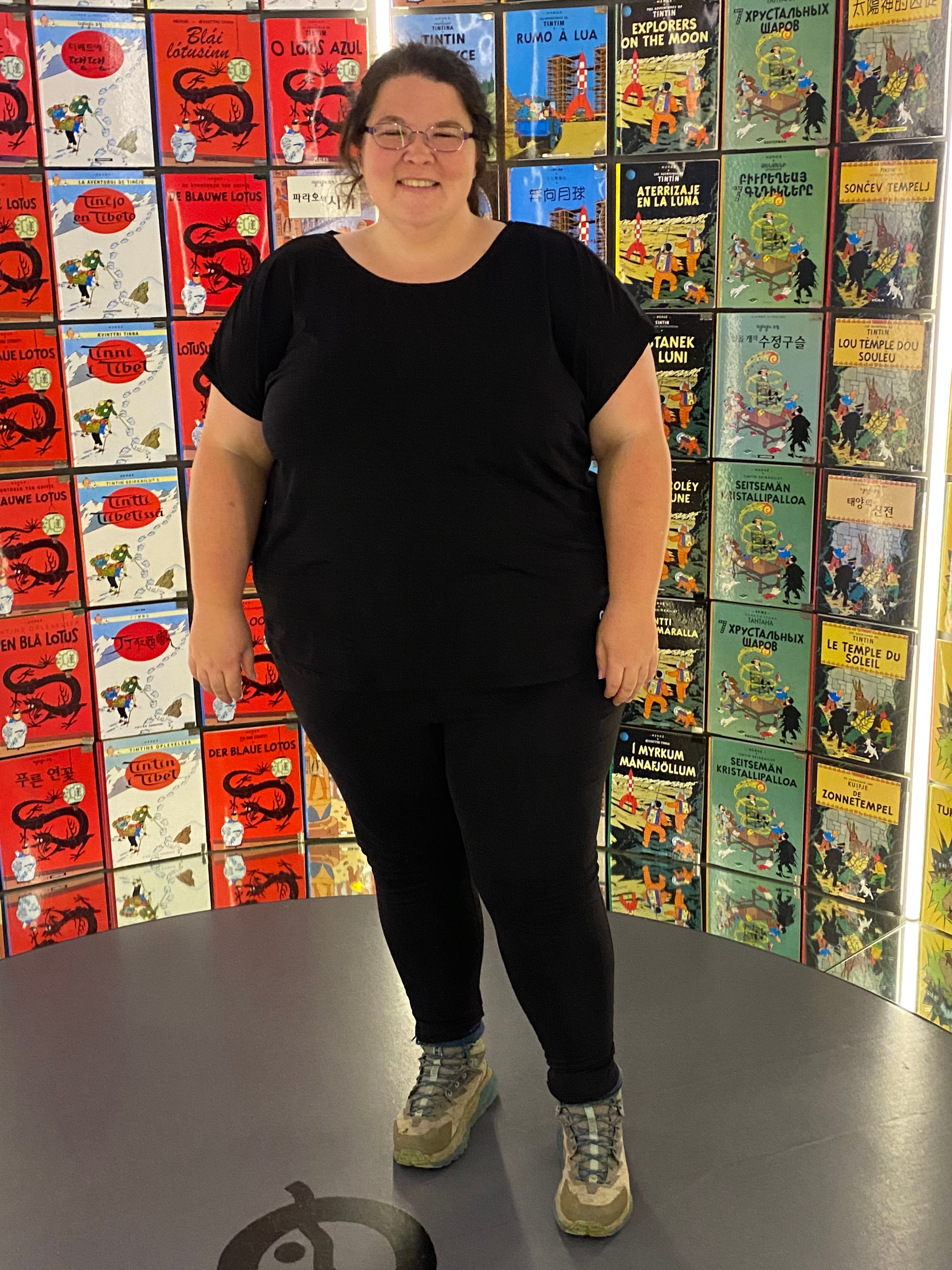
PS: Oops, my eyes are closed!
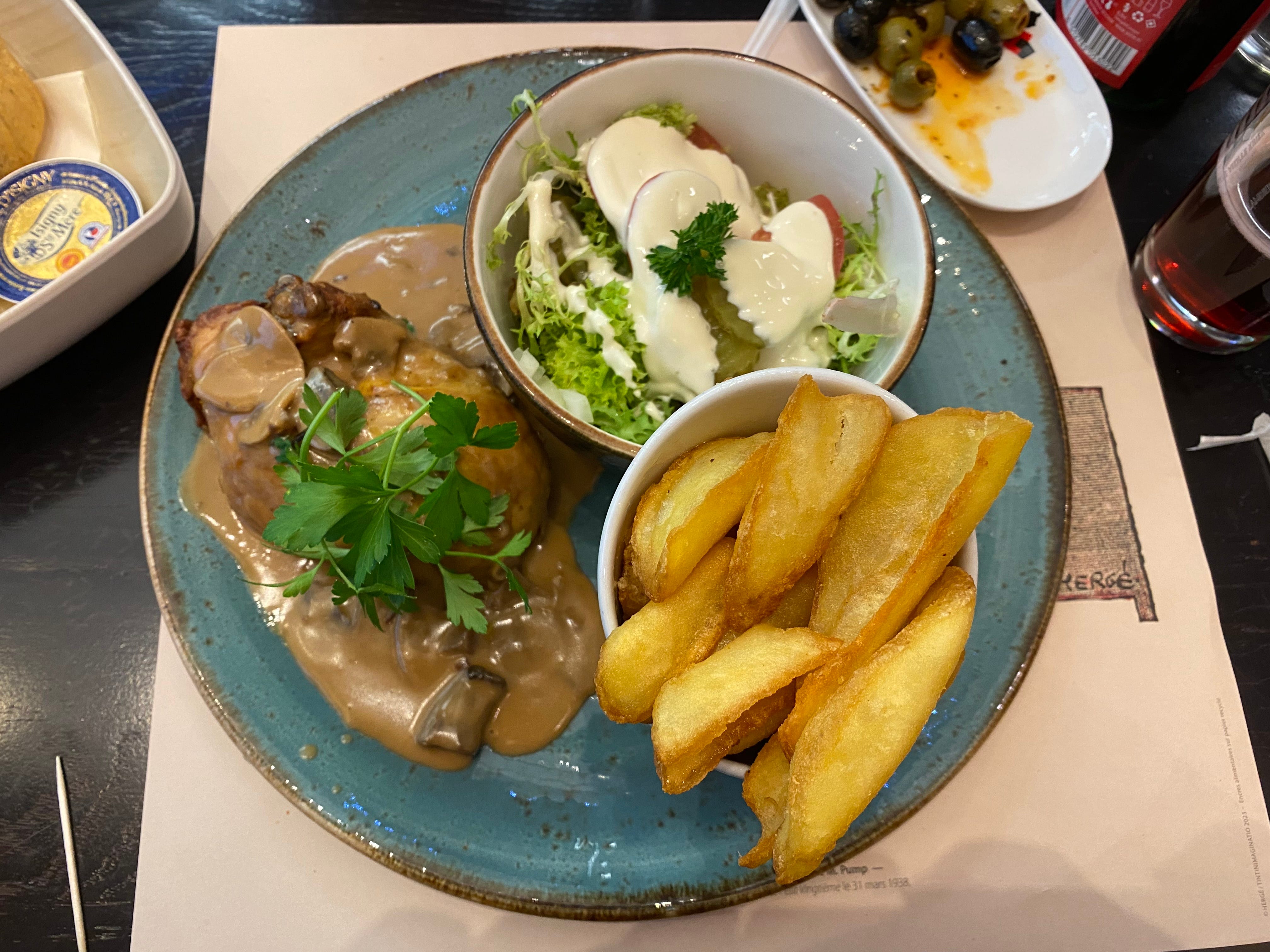
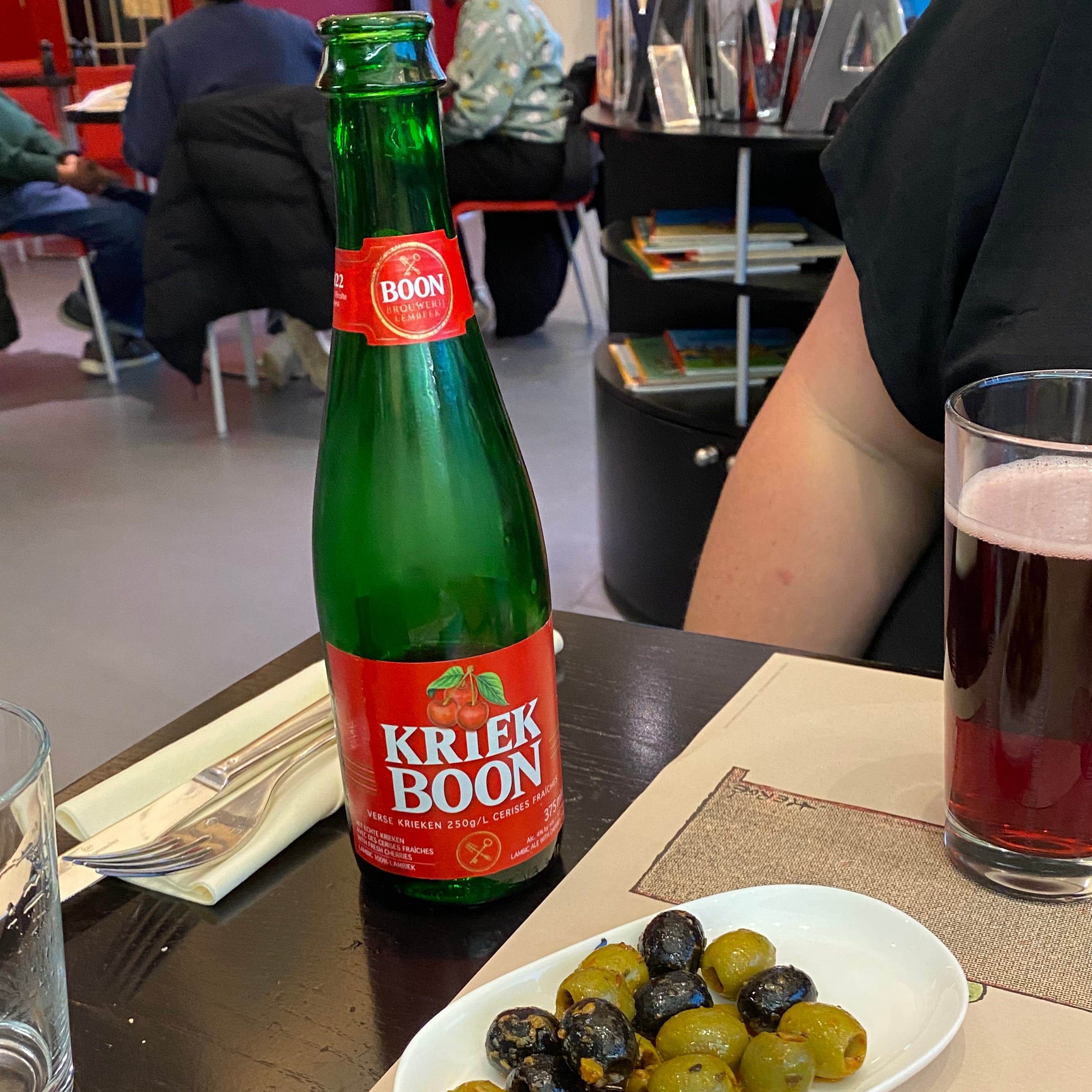
PPS: There was a restaurant where we ate a late lunch. Its prices are the same as other museum restaurants (not cheap) but it was definitely delicious! And it was so fun to once again drink a Kriek (a beer made from cherries).
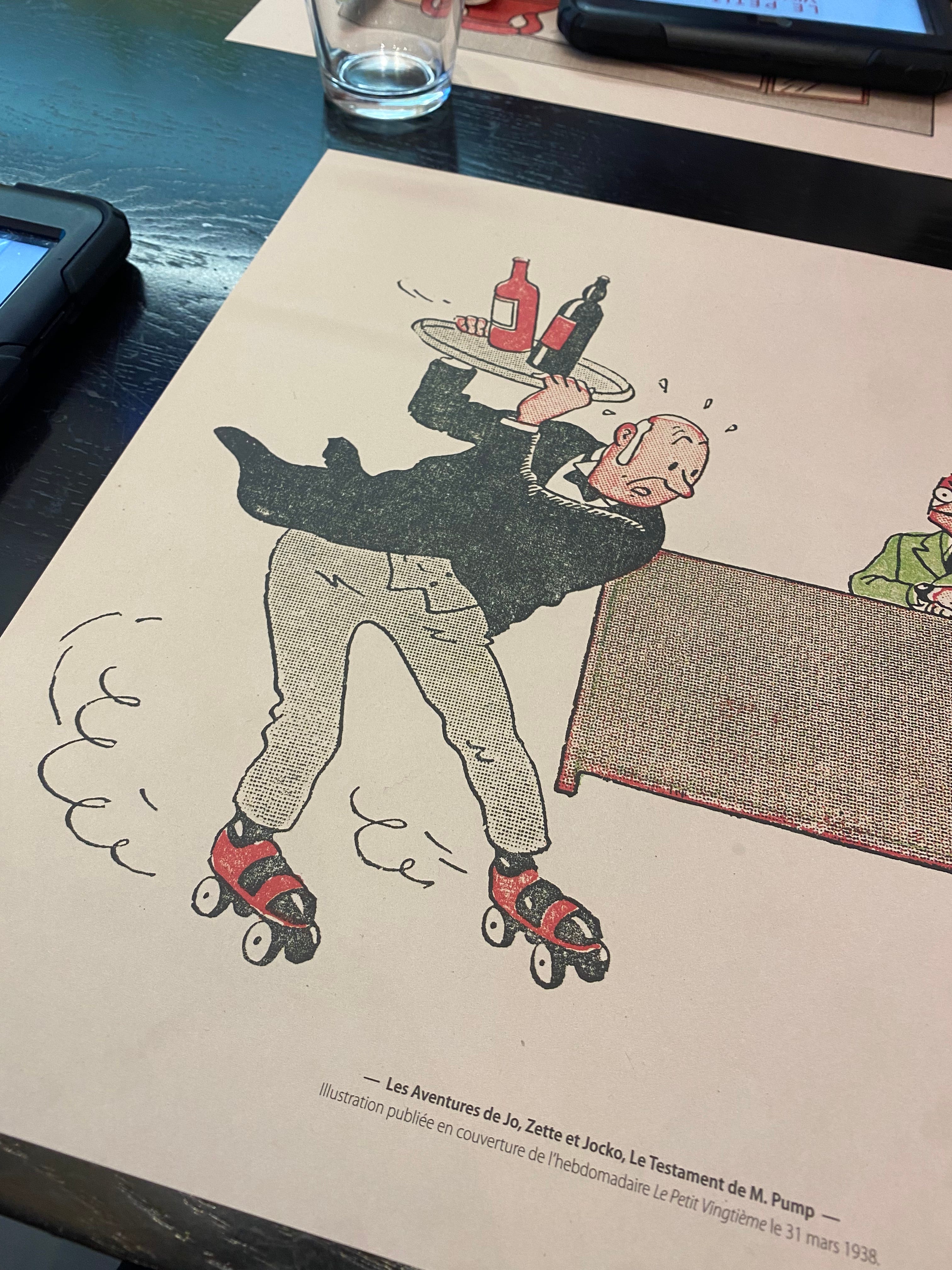
PPS: The placemats were prints of some of Hergé’s work!
* Back in 2003, I lived in Belgium for a year as an exchange student. I lived with four different families. I’m still close to the first family and was lucky enough to visit them in 2008 and 2016 as well as again now.